
Lipid Handling in the Body
The metabolic processes of dietary fat processing and lipid regulation in human physiology.
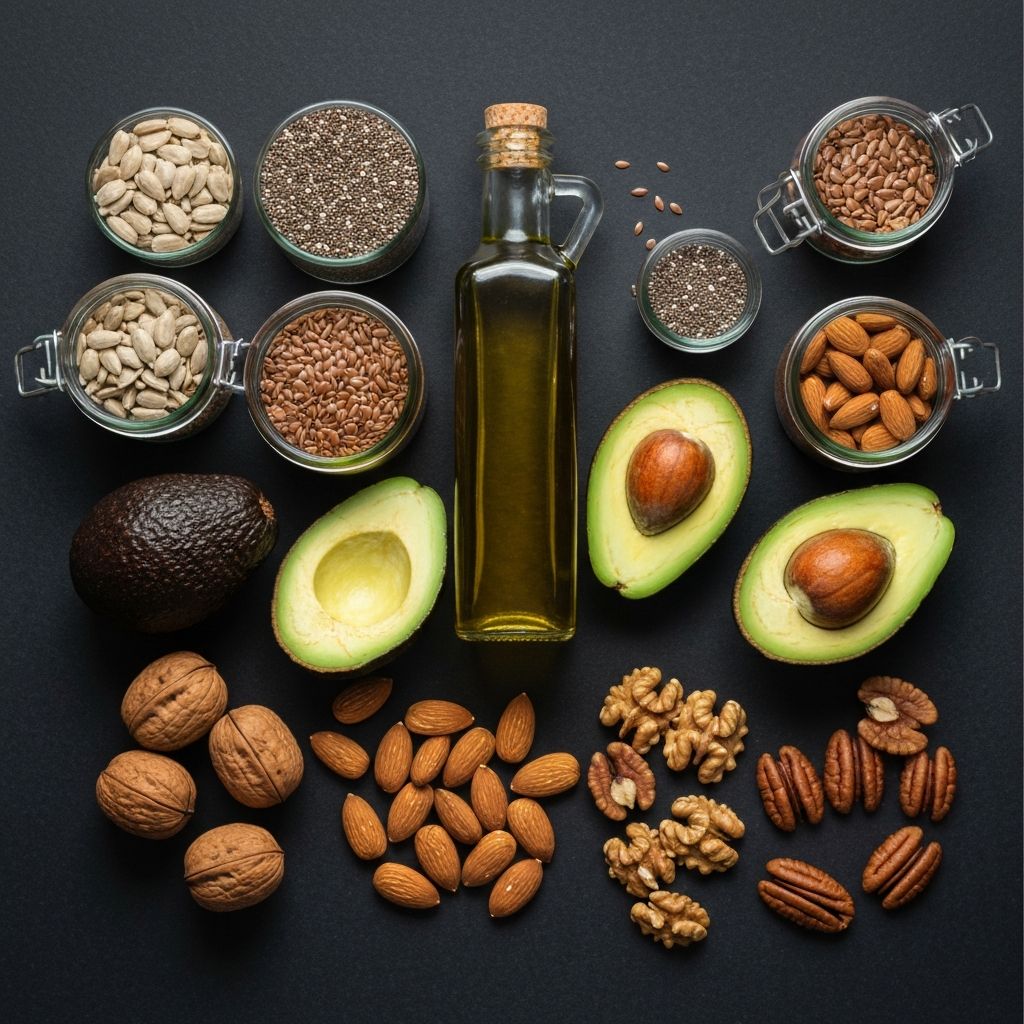
Lipid Structure and Classification
Dietary lipids include triglycerides (the primary form of dietary fat), phospholipids, cholesterol, and fat-soluble vitamins. Triglycerides consist of a glycerol backbone with three fatty acid chains attached. Fatty acids vary in saturation—the number and positioning of double bonds between carbon atoms—which influences their physical properties and metabolic effects.
Fat Digestion
Fat digestion involves the emulsification of lipids and their breakdown by lipase enzymes. Bile from the gallbladder emulsifies fats into smaller droplets, increasing surface area for lipase action. Pancreatic lipase then breaks triglycerides into monoglycerides and free fatty acids.
These products are packaged into micelles—small structures that facilitate absorption across the intestinal epithelium. This process allows hydrophobic (fat-loving) lipids to move through the aqueous environment of the digestive tract.
Absorption and Transport
After absorption, fatty acids and monoglycerides are re-esterified back into triglycerides within intestinal cells. These are then packaged into chylomicrons—lipoproteins containing triglycerides, cholesterol, and proteins—which enter the lymphatic system and eventually the bloodstream.
Chylomicrons transport dietary lipids throughout the body. Lipoprotein lipase, an enzyme on capillary endothelial cells, breaks down triglycerides in chylomicrons, releasing fatty acids that can be taken up by tissues for energy or storage.
Lipid Storage
Excess energy from any macronutrient source can be stored as triglycerides in adipose tissue. In the fasted state, adipose tissue undergoes lipolysis—the breakdown of stored triglycerides into glycerol and fatty acids—which are released into the bloodstream to provide energy for other tissues.
The capacity for lipid storage is large compared to carbohydrate and protein storage, reflecting fat's role as a long-term energy reserve.
Fatty Acid Oxidation (Beta-Oxidation)
In the mitochondria, fatty acids undergo beta-oxidation, a series of reactions that progressively removes two-carbon units from the fatty acid chain, generating acetyl-CoA. Acetyl-CoA enters the citric acid cycle to generate ATP (energy) for cellular use.
The rate of fatty acid oxidation is influenced by energy status, hormonal signals (especially insulin and glucagon), and physical activity level. During fasting or exercise, fatty acid oxidation increases to meet energy demands.
Ketogenesis
When carbohydrate availability is limited and fatty acid oxidation is high, the liver produces ketone bodies from acetyl-CoA. These water-soluble compounds are released into the bloodstream and can be used by extrahepatic tissues for energy. Ketone production increases during prolonged fasting, low-carbohydrate diets, or strenuous exercise.
Lipid Synthesis
The body can synthesize fatty acids from excess carbohydrates or amino acids through a process called de novo lipogenesis (new fat synthesis). Acetyl-CoA from carbohydrate metabolism serves as the building block. Fatty acids are then incorporated into triglycerides for storage.
The efficiency of this conversion—how much dietary carbohydrate becomes body fat—varies based on the overall metabolic state and individual factors.
Cholesterol Metabolism
Cholesterol serves essential roles in cell membrane structure, hormone synthesis, and bile acid production. The body synthesizes cholesterol (primarily in the liver) and also obtains it from dietary sources. Cholesterol is packaged into lipoproteins of varying density—VLDL, LDL, and HDL—which transport lipids throughout the body.
Fat-Soluble Vitamins
Vitamins A, D, E, and K are fat-soluble and require dietary fat for absorption. They are stored in adipose tissue and the liver. Fat-soluble vitamin absorption is influenced by the presence of dietary fat and the integrity of digestive and absorptive mechanisms.
Important Context
This article explains lipid metabolism and physiological roles of fats. Dietary fat composition, quantity, and individual metabolic factors influence lipid metabolism. Different fat types have distinct metabolic effects. Individual circumstances, overall dietary patterns, and health status influence how fat intake affects individual physiology.
Continue Exploring
Related articles that expand on these concepts: